What the best website for a law firm actually does
Somebody reading a law firm's website usually has a problem they are slightly embarrassed about and no way to judge one firm against another. They are checking whether you are real, whether you do this specific thing, who would actually handle it, and what it might cost, and then they are deciding whether to make a phone call they are dreading.
Most firm websites answer the first question and none of the others.
Name the practice areas in the client's words
A person does not search for contentious probate. They search for what to do when a will is being disputed. A page headed with the statutory term, written for a peer audience, will not be found by the client it was meant for and will not be quoted by an assistant answering their question.
Write each practice area with the client's phrasing in the heading and the correct term in the text. That is not dumbing down: it is the difference between being findable and being correct only in private.
Say something honest about cost
Cost is the reason most people do not call a solicitor. A firm that publishes fixed fees where it can, and an hourly range where it cannot, converts far more of the readers it already has than one that writes fees on application.
You do not have to publish a full rate card. Fixed fees for conveyancing, wills, probate and employment settlement agreements are common practice and easy to state. For everything else, publish the range of the partner and associate rates and say how an estimate is produced. Regulatory price-transparency rules already require this in several areas; doing it well is an advantage rather than a compliance chore.
- Fixed fees where the work is predictable, with what is and is not included
- An hourly range by seniority for everything else
- How an estimate is produced and when it would be revised
- Whether a first conversation is free and how long it lasts
The people are the product
Clients instruct people. Each solicitor needs a photograph, the qualification, the year of admission, the matters they take, and one or two sentences with a human being in them. A page of identical portraits and identical biographies tells a prospective client nothing and is the most common failure on firm websites.
If a partner has particular experience in the exact problem the reader has, say so in words the reader would use. That is the sentence that turns a browse into a call.
Make the enquiry route specific
Say what happens after somebody sends the form: who reads it, how long a reply takes, and whether the first conversation costs anything. An enquiry form with no stated response time is a form that people do not send, because they have no idea whether they are joining a queue or shouting into a void.
Give a phone number as well. A significant share of legal enquiries are urgent, and a form is the wrong instrument for those.
Publish the regulated details properly
Regulatory information, complaints procedure, professional indemnity details and the firm's registration are not footer clutter. A careful client checks them, and a firm that presents them clearly reads as a firm that takes its obligations seriously.
Put them somewhere findable rather than somewhere technically present.
What it should cost
Law firm websites are routinely sold as five-figure projects, and a large part of that budget goes into a bespoke design that a client will not consciously notice. What a client does notice is whether the practice areas made sense, whether the people looked real, and whether anything on the page addressed the cost.
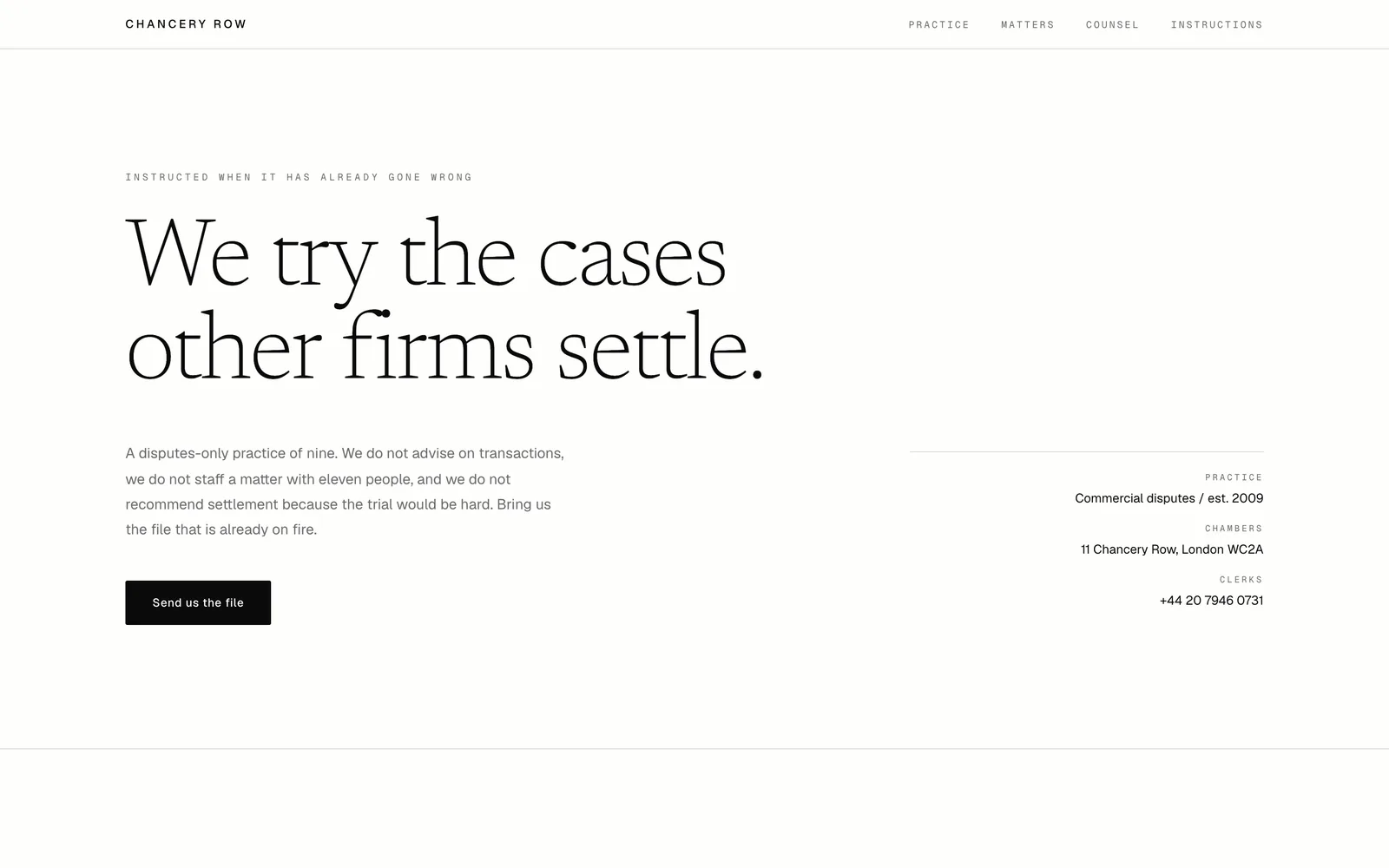
The two decks named here are finished sites in that register. You put your firm's name, practice areas, people and fee structure in through one form, and it is live on a real address in under a minute, free for the first seven days, with hosting and maintenance in the monthly price.
Two you can look at right now
Both of these are running sites rather than pictures of sites. Open one, then put your own name, words and pictures into it: that takes under a minute and it is free for the first 7 days. From $9.99 a month to keep it, hosting included.
- Chancery Row: A disputes practice set like a printed judgment: practice areas that scan, people with their matters, and one clear route to a first conversation.
- Ascend: A quieter, private-client register, for a firm whose work is wealth, estates and long relationships rather than litigation.

Questions people ask first
Should a law firm publish its fees online?
Where the work is predictable, yes: fixed fees for conveyancing, wills, probate and settlement agreements. Elsewhere publish an hourly range by seniority and explain how an estimate is produced.
What makes a law firm website credible?
Real people with qualifications and the matters they take, practice areas written in the client's language, a stated response time, and regulated details that are easy to find.
How long does a law firm website take to build?
A bespoke build is usually months. A finished deck filled in through one form is live in under a minute, because the design and the structure already exist.