What the best website for a gym actually does
Anybody reading a gym website has already decided to join something. They are deciding which, and the question underneath every other question is whether they will feel out of place. A site that answers only on price and opening hours leaves that question open, and the gym down the road that answered it gets the walk-in.
The good news is that answering it is mostly a matter of showing the room honestly and publishing the timetable.
The timetable is the most-read page you have
Members and prospects both check it constantly, usually on a phone, usually in a hurry. It has to be readable on a small screen without zooming, organised by day, and honest about which sessions fill and which need booking.
It also has to be editable by you. A timetable that requires a developer to change is a timetable that is wrong by the second month, and a wrong timetable costs you a member who turned up for a class that no longer runs.
Publish the membership prices
Fitness is one of the few sectors where hiding the price is still common, and it is still a mistake. Somebody comparing three gyms will discount the one that would not say, because the assumption is that the price is either high or conditional on a sales conversation they do not want to have.
Publish the monthly figure, the joining fee if there is one, the minimum term, and what the cancellation notice is. Being the gym that is straightforward about the contract is a genuine differentiator in a sector known for the opposite.
- Monthly price, and the annual one if it is cheaper
- Joining fee, minimum term and cancellation notice
- What off-peak actually means in hours
- Whether classes are included or booked separately
Show the room as it is
Photograph the free-weight area, the cardio floor, the changing rooms and the busiest hour. Prospective members are trying to work out whether there is space at six in the evening, whether the squat racks are always taken, and whether the showers are acceptable.
Empty gym photographs taken at eleven in the morning answer none of that and read as evasive to anyone who has been to a gym before.
Introduce the coaches properly
Names, photographs, qualifications and what each of them actually specialises in. A person nervous about starting is looking for somebody they could imagine asking a stupid question, and that is a decision made on faces and sentences rather than on certifications alone.
If you offer an induction or a free first session, say exactly how somebody claims it and what happens in it. A vague free trial converts worse than a specific 45-minute induction with a named coach.
Answer the beginner's question directly
Somewhere on the page, in plain words, say who the gym is for and what a first visit is like. A barbell gym should say it is a barbell gym. A studio that is mostly classes should say so. Being clear costs you enquiries from people who would not have stayed and wins the ones who were nervous about walking in.
What it should cost
A gym site changes often: timetables, prices, a January offer, a new coach. Paying for each change is why so many gym websites carry last year's schedule.
These decks are finished fitness sites you fill in and then maintain yourself through the same form. Live on a real address in under a minute, free for the first seven days, with the hosting included in the monthly price and no charge for changing your own timetable.
Two you can look at right now
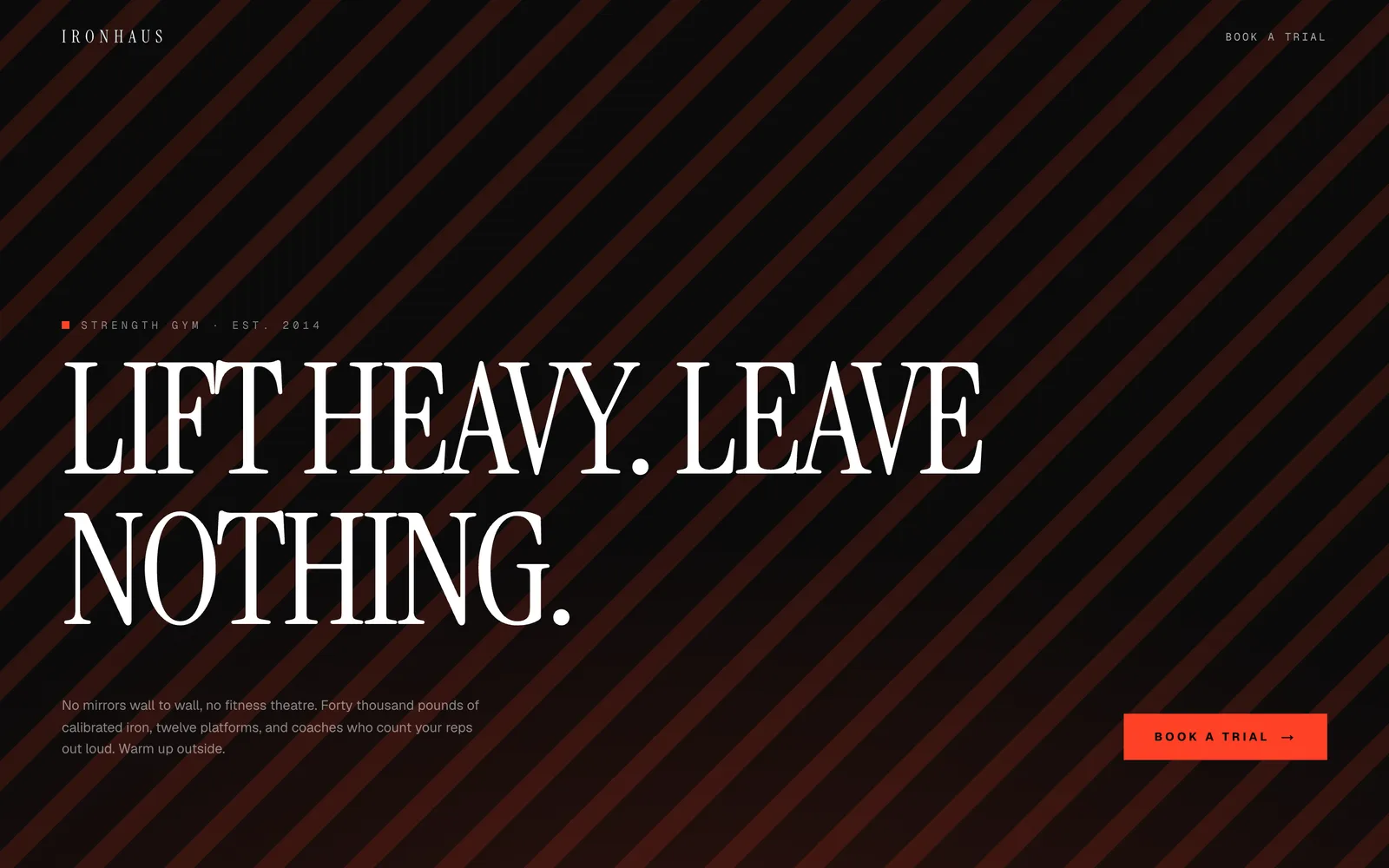
Both of these are running sites rather than pictures of sites. Open one, then put your own name, words and pictures into it: that takes under a minute and it is free for the first 7 days. From $9.99 a month to keep it, hosting included.

Questions people ask first
Should a gym publish membership prices online?
Yes. Members compare on price and terms, and a gym that will not say what it costs is assumed to be expensive or contract-heavy. Publish the monthly figure, the joining fee and the notice period.
What is the most visited page on a gym website?
The class timetable, by a distance, and mostly on phones. It needs to be readable on a small screen and editable by you without a developer.
How do I make a gym website less intimidating?
Photograph the room at a busy hour rather than empty, name the coaches with their specialisms, and say plainly who the gym is for and what a first session involves.