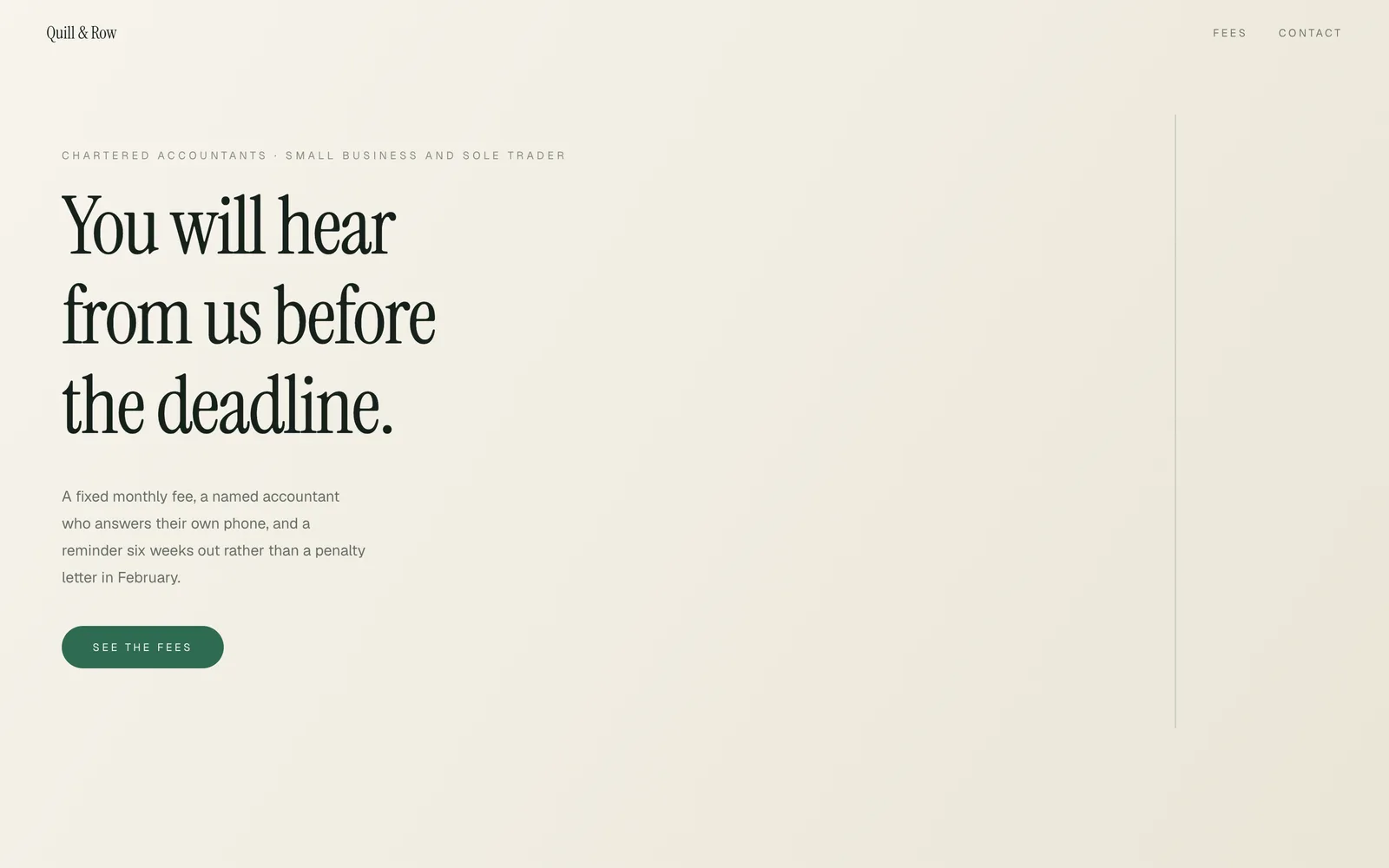
A practice website can remove that fear, and almost none do. Three things decide it: what a fee actually covers, which dates matter, and what switching involves.
Write the scope behind the fee
A monthly fee with no edges is a fee the reader assumes will grow. The useful page is not the one with the lowest figure but the one that says what is inside it and what is not. Name the work the fee covers, then name the three or four things that would change it.
Typical edges are late records, a sudden jump in the number of transactions, a change in the structure of the business, and correspondence from the tax authority that needs a response. Naming them costs nothing and makes every other sentence on the page more believable.
- What is included, as a list of the work and not the service category
- What would change the fee, and who would tell the client first
- Whether the fee is fixed for the year or reviewed
- A figure only if you will honour it
Put your own cut-off dates in the calendar
A calendar of the authority's deadlines is on every accountant's site and tells a client nothing they could not find themselves. What is useful is the date by which you need their records to meet that deadline calmly. That is a date only you can supply.
Take the authority's dates from its own pages, check them each year, and show your cut-offs beside them. A calendar still showing last year's date is worse than none, because a client may rely on it.
Lay out the switch as a short sequence
Write down what happens when a new client moves to you, in order: they sign an engagement, you ask the previous accountant for the handover information, you collect access to the records, you check what has been filed, and you tell the client what is outstanding and when.
Say what you need from the client at each step and roughly how long it takes. The point is to show that you have done this before and that nobody will be left in a gap, which is what the reader is afraid of.
Tell them who they will speak to
Clients choose the person who answers, not the firm name. Say who handles small clients and who handles larger ones, and what reply time you honour. A named person and a stated reply time beat a paragraph about being approachable.
If a junior will do much of the work, say so and say who reviews it. It sounds like a risk and reads as honesty.
Put the professional details where a checker looks
Your supervisory registration, each principal's professional designation, and a statement that the firm holds indemnity insurance are the things a careful owner checks. Give each as text with the body's name, not as a logo, and say where the register can be searched.
Do not invent credentials or imply one you do not hold. A reader who finds the gap loses trust in everything else you wrote.
Say what the button does
On this site the main button opens an email to you or rings your office, with a link out to your existing client portal for current clients. Say that near it, together with who reads the message and how fast a reply comes. Whether the first conversation costs anything is the question a nervous reader most wants answered.
Questions people ask first
Should an accountant publish fees on their website?
Publish what a fee covers and what would change it. A figure is worth showing only if you will honour it, and the scope matters more than the number.
What should a deadline calendar on an accountant's website include?
Your own cut-off dates for client records alongside the authority's dates, taken from the authority's pages and re-checked each year.
How do I make it easy for someone to switch accountant?
Show the handover as a short sequence of steps, say what you need from the client at each one, and say who they will deal with.