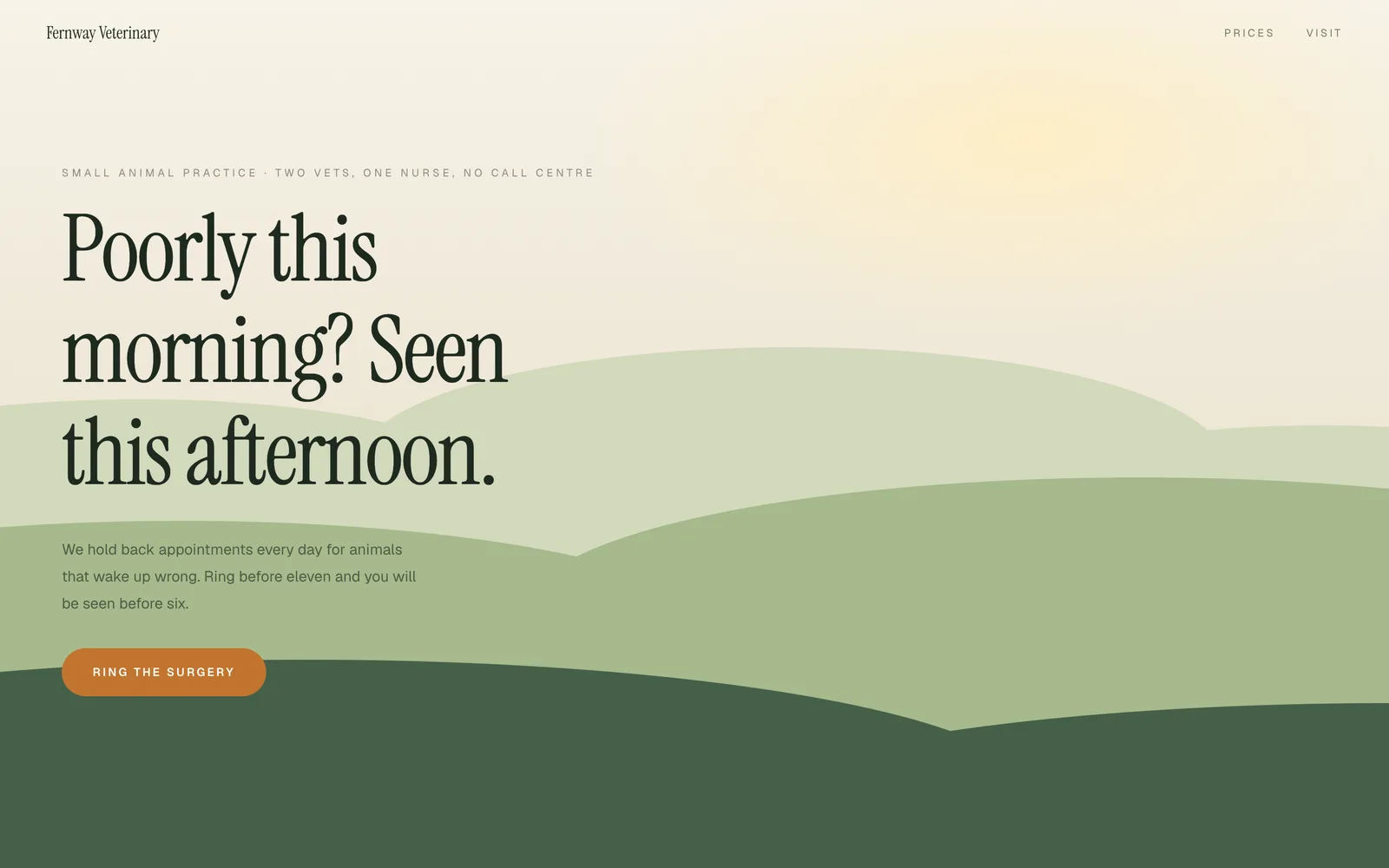
A good vet site is calm, clear and fast. Here is how to build one and what it costs.
Who is actually reading it
Some readers are in a hurry, with an unwell animal. Others are new to the area and choosing a practice, or are planning a routine visit, vaccinations or a neutering. The urgent reader needs your number and your out-of-hours arrangements. The planning reader wants to know whether you are taking new patients and what a first visit involves.
The first screen
Where a phone can see it at once:
- The phone number as a tap-to-call link
- Opening hours and what to do outside them
- Where emergencies go at night and at weekends
- Whether you are accepting new patients
- The address, with parking noted
List what you treat
Name the animals you see and the services you offer, from routine care to surgery and dental work. If you refer cases elsewhere, say so. Owners are reassured by honesty about what you do not do.
Show the team and the building
Photographs of the real clinic and the real people reduce an owner's anxiety more than any reassuring copy. Name the vets and nurses and give their qualifications.
What it should cost
A practice rarely needs a bespoke build. It needs a site that is accurate when the hours or the emergency arrangements change.
A finished veterinary site is the quick route. You put in your practice name, your services, your team and your hours, and it is live on a real address in under a minute. It is free to look at before you decide, and the price includes hosting and maintenance.
The route-by-route numbers, and what the monthly price covers, are in how much a vet website costs.
Questions people ask first
What should a vet website say about emergencies?
Exactly who to call, at what number, at which hours, and where to go if the practice is closed.
Should I show prices?
For routine services, yes, as from prices. Owners value knowing roughly what to expect.
Can owners register online?
The decks open an enquiry or registration request. They do not run a practice management system.