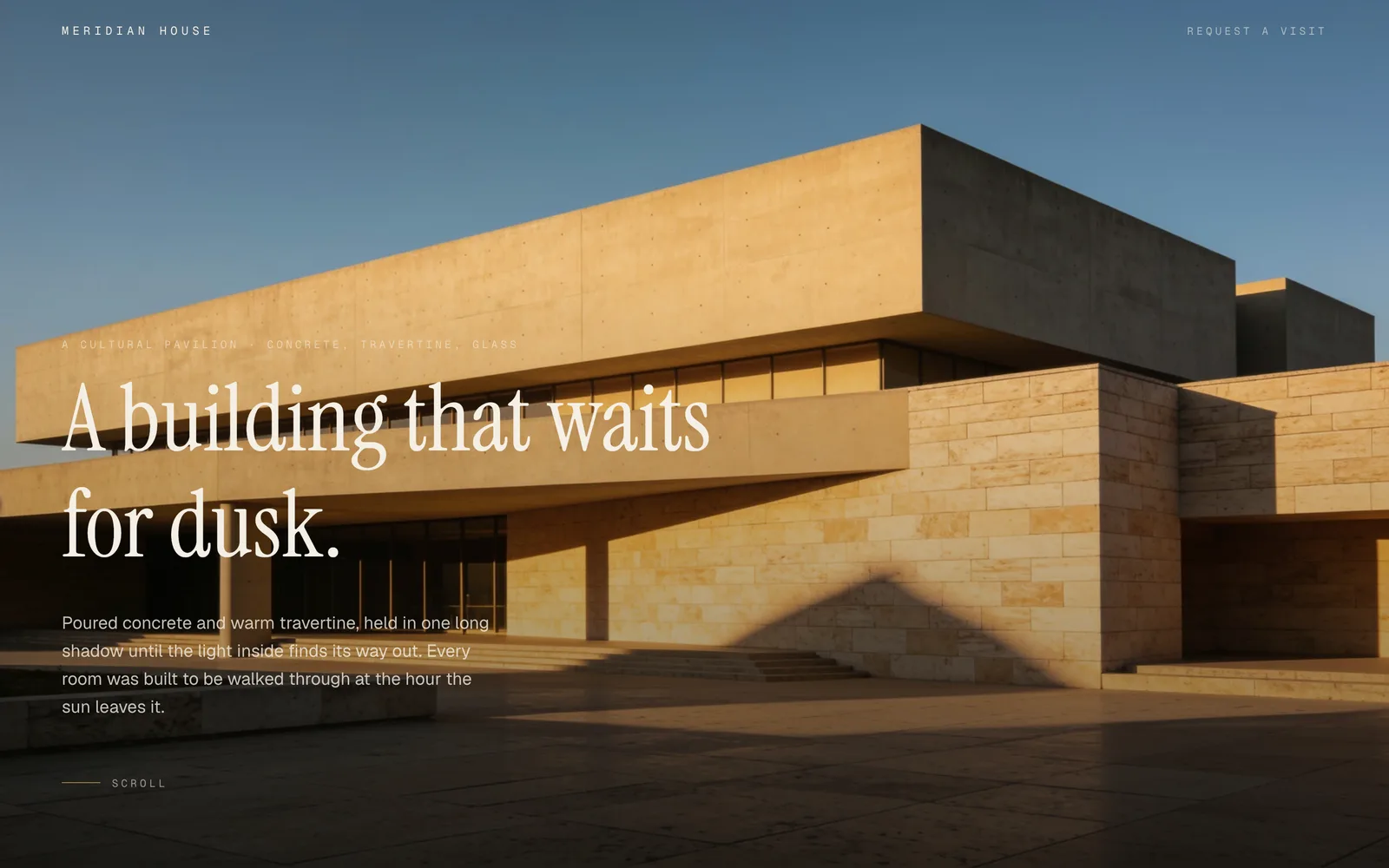
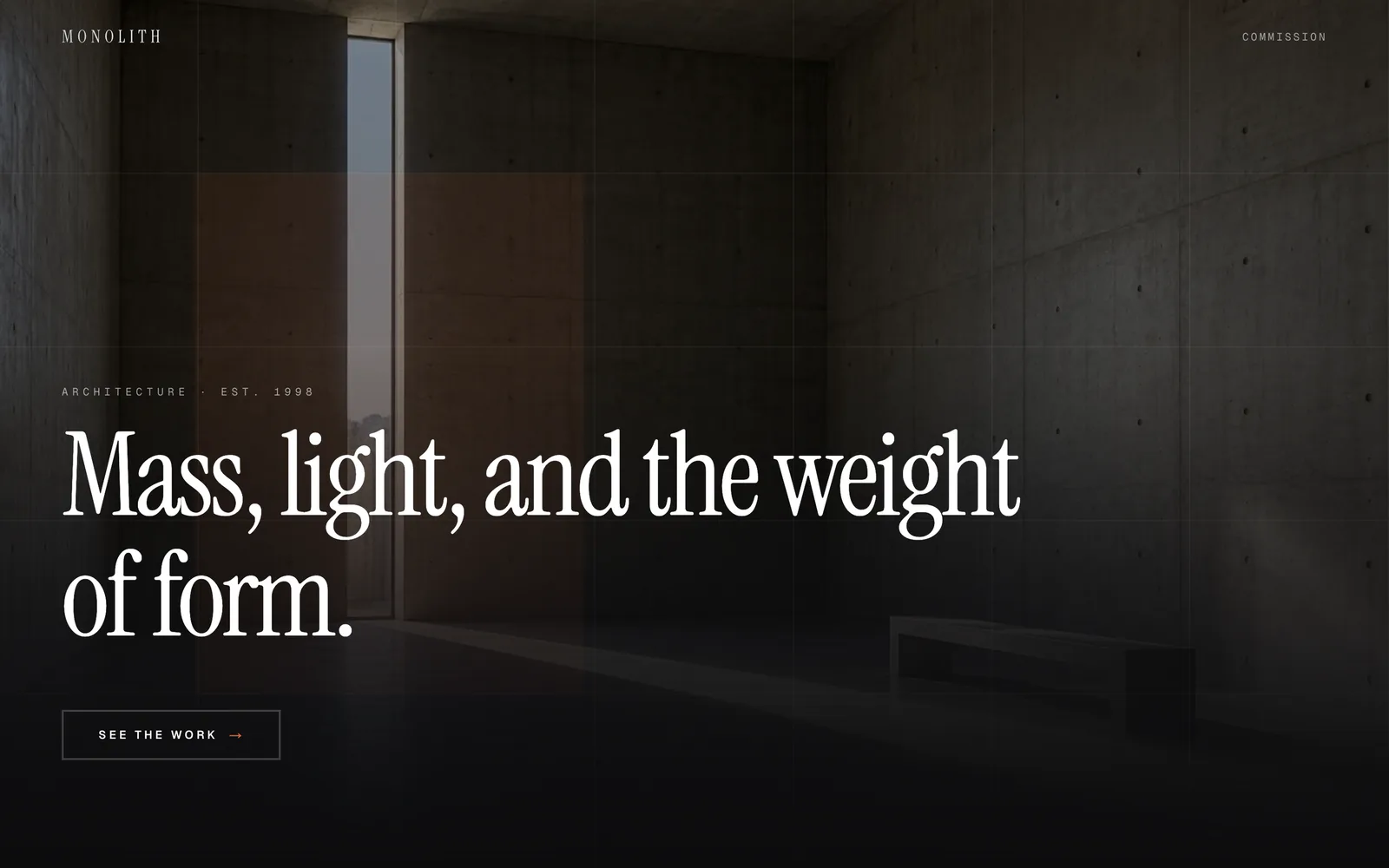
This is what the good practice sites do for both, and where the money in a site for an architect actually goes.
Show built work, and say what it was
Pictures alone do not tell a client whether a project resembles theirs. For each project put a short factual block beside the images: the location, the type of building, the size, the year, your role and who else worked on it. A client with a kitchen extension can then find the kitchen extension without reading about a museum.
Order the work for the client you want more of, not for the one you impress most. If most of your income is houses, the first six projects should be houses.
Explain how you work
The most useful page for a nervous first-time client is the one that describes the stages: the first conversation, the brief, the design, planning permission, the build, and what you do at each. Say plainly which of those you offer and which you do not.
Fees are the question nobody answers. You do not have to publish a price list, but saying how you charge, whether a percentage, a fixed fee or hourly, and roughly what size of project you take on, filters out the wrong enquiries and makes the right ones easier.
What belongs on the practice page
A client is hiring people, so the people should be there:
- Who leads the practice, with their registration or professional membership
- A real photograph of the team or the studio, not a stock office
- How many projects you take on at once, so a client knows whether you have time
- Where you work and how far you will travel for a project
- Awards and press, only where they are real and you can link to the source
Images are the cost, not the code
Photography is the part of an architect's site that is expensive, and the part that carries the pitch. A good photographer for a finished building costs more than most site builds, and it is a cost you bear whichever route you take.
Credit the photographer on the page, and check what your contract lets you do with the images. Then make the site light on a phone: a gallery that takes ten seconds to load on mobile data loses the client who found you on the train.
The route to commissioning you
End every project page with the same short invitation: tell us about your site and what you want to build. A form that asks for the location, the type of project and a rough budget saves both sides a call.
Say how quickly you reply and whether you are taking on new work. A practice that is full for a year should say so; it saves the enquirer's time and makes the practice look sought after.
How much does an architect website cost
Architects often commission a bespoke site and wait months for it, then find they cannot add a new project without the designer. For most practices a finished site that they edit themselves is the better first move, with the money kept for photography.
A finished architecture website is a running site. You put in your practice, your projects, your pictures and your contact details and it is live on a real address in under a minute. It is free for the first 30 days, so you can look at your own work on it before you decide, and the monthly price includes hosting and upkeep. The full breakdown is in how much an architect website costs.
Questions people ask first
How many projects should an architect show?
Enough to show the range you want more of, usually six to twelve, each with room for its facts and its pictures. A few well presented projects beat a long list of thumbnails.
Should an architect publish fees?
Not necessarily a price list, but say how you charge and what size of project you take on. It saves time on both sides and filters out enquiries that were never going to work.
Do I need a bespoke site as an architect?
Not to start. A finished site that shows your work well is live first, and the images you already own do the persuading. You can commission a custom one later if the practice grows into it.