restaurant / 4 finished sites
Restaurant websites, finished and live
Start here
From $9.99 a month, and the preview is free.
See a finished restaurant siteIt opens as a real, running site you can scroll. Yours would look like it, with your own words in it.
Most restaurants we look at have one of these. A PDF menu uploaded years ago, with last season's dishes and prices, linked from a site that is mostly a stock photo of a table. A listing on the review and booking platforms, where the restaurant competes with every other place in town and pays per cover. An Instagram account with beautiful photos and no hours, no address and no menu.
And the owner says things like “Every day someone rings to ask whether we have a vegetarian option or can seat eight on Saturday, and the website does not say.” “The booking platform charges us per cover and shows our table next to the place across the road.” “Our menu changes weekly, and the PDF on the site is a month old by the time anyone reads it.” “People see the food on Instagram but cannot tell what the room is like or whether it is a date place or a family place.” “Google shows the wrong opening hours on a bank holiday and we turn people away at the door.”
The owner chef or owner manager, deciding between lunch and dinner service. Not a marketer: whoever updates the menu also decides, and the owner signs on seeing the room on a phone.
Top to bottom
What your restaurant site holds, in the order a visitor meets it
Book a table
The goal of the whole site; the button sits above the fold on a phone.
The room
Guests decide the occasion (date night, family, groups) from the photographs of the room.
Allergens and dietary needs
A guest with an allergy will not book without an answer, so it is stated, not hidden.
Groups and private dining
Large parties are the highest-value covers and need their own route in.
The kitchen and the people
A short story of the chef and the sourcing is what makes one place worth the journey over another.
Hours, address and parking
Wrong hours turn guests away; a single clear block, kept current, prevents it.
Your proof, laid out
The facts a restaurant is checked on
You supply each of these and we give it a clear place on the page. We never invent one for you.
- Reviews you already hold
- Reviews and guides. The platform ratings and guide mentions the restaurant already holds, named and not invented
- Your own work
- The food and the room. Real photographs of dishes and the dining room at the lit hour
- Training
- Allergen and dietary information. A clear statement of how the kitchen handles allergens and which dishes are vegetarian, vegan or gluten free
- How long you have been there
- Chef and years. The chef's name and background and the year the restaurant opened
- Who registers you
- Hygiene rating. The local food hygiene rating, as the authority published it
Our estimate, not research
One new regular table, worth about $100 to $900 in a year by our estimate, covers the entry price of $9.99 a month for around 10 months.
Our estimate, not research. A single new table of two spending a typical evening is worth about $100 to the restaurant; a regular who returns six or seven times, or a group booked for a celebration, reaches $900 in a year. Spend per head varies by country and by restaurant, so use your own average cover.
What owners ask us first
What restaurants ask us first
“I already take bookings through the booking platform.”
Keep it. The main button on the site opens that platform, or your own system, in one tap. The difference is that a guest arrives via your own address, sees your menu and room, and is more likely to book directly where you avoid the per-cover fee.
“Can guests book a table right on the site?”
Not natively. The site links to the booking tool you already use and does not run a table plan or diary of its own, so guests are never in a dead end.
“My menu changes every week.”
Then the menu is text you edit yourself, not a PDF. You change a dish in a minute and it is live, which is why a weekly changer benefits more than anyone.
“I need an online ordering and delivery system.”
We do not build an ordering system or portal. The site can link out to the delivery or takeaway service you already use. For a sit-down restaurant the site's job is to fill the room, and ordering stays with the tool you trust.
“I am too busy to build a website in service hours.”
One form with your name, address, hours, menu and links to a few photos, filled on a quiet afternoon. A preview is live in under a minute, and you can show it to the team.
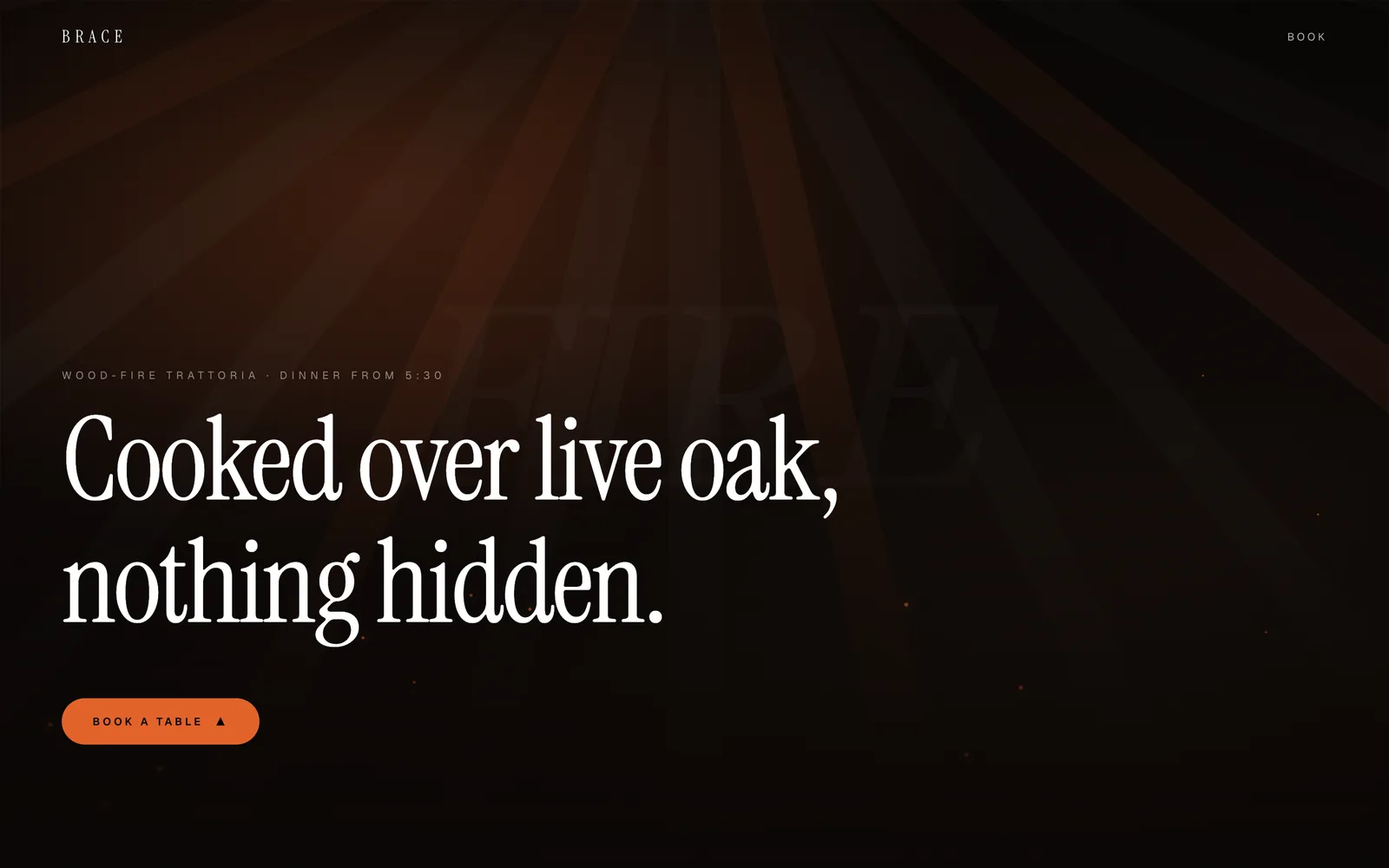
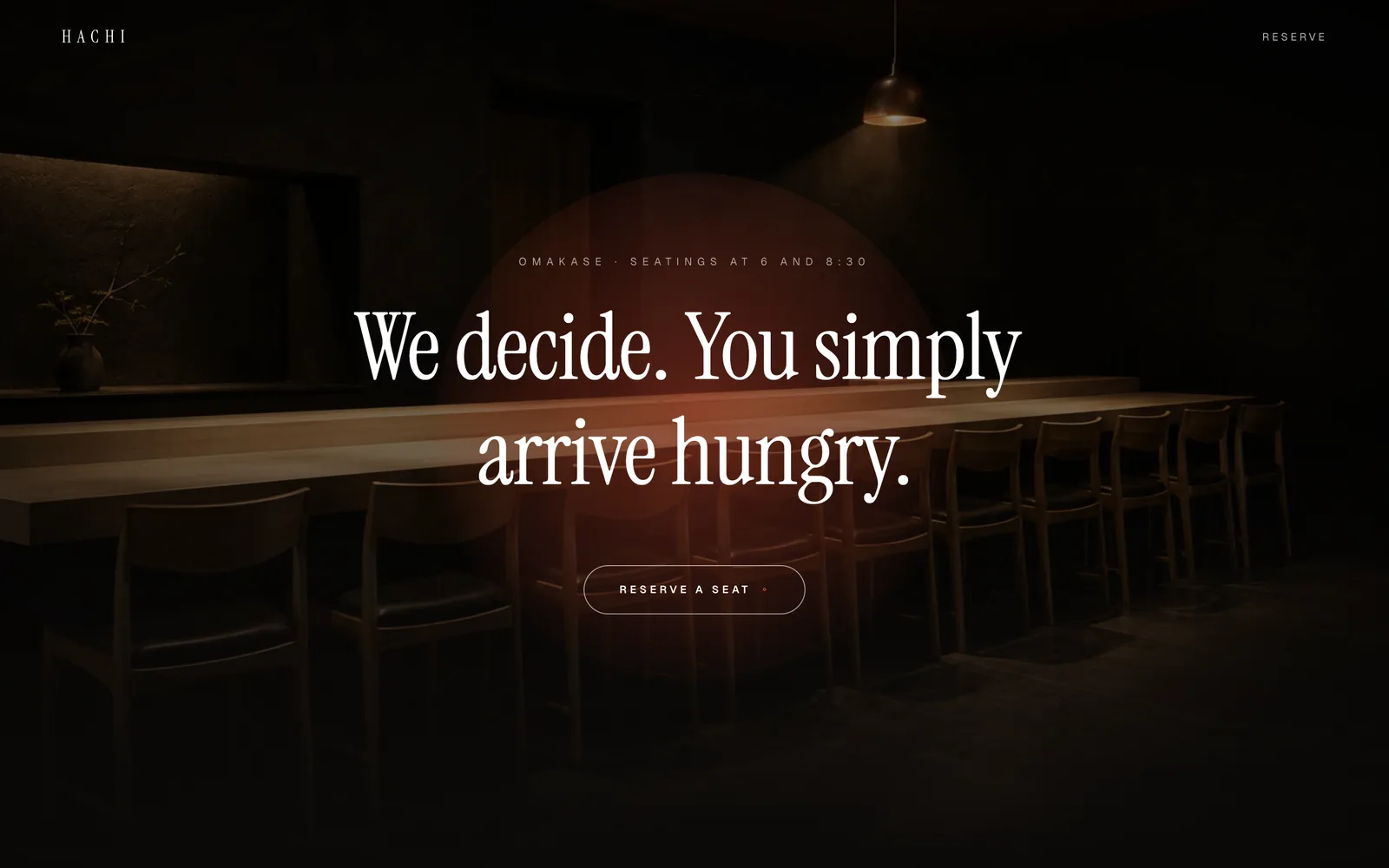
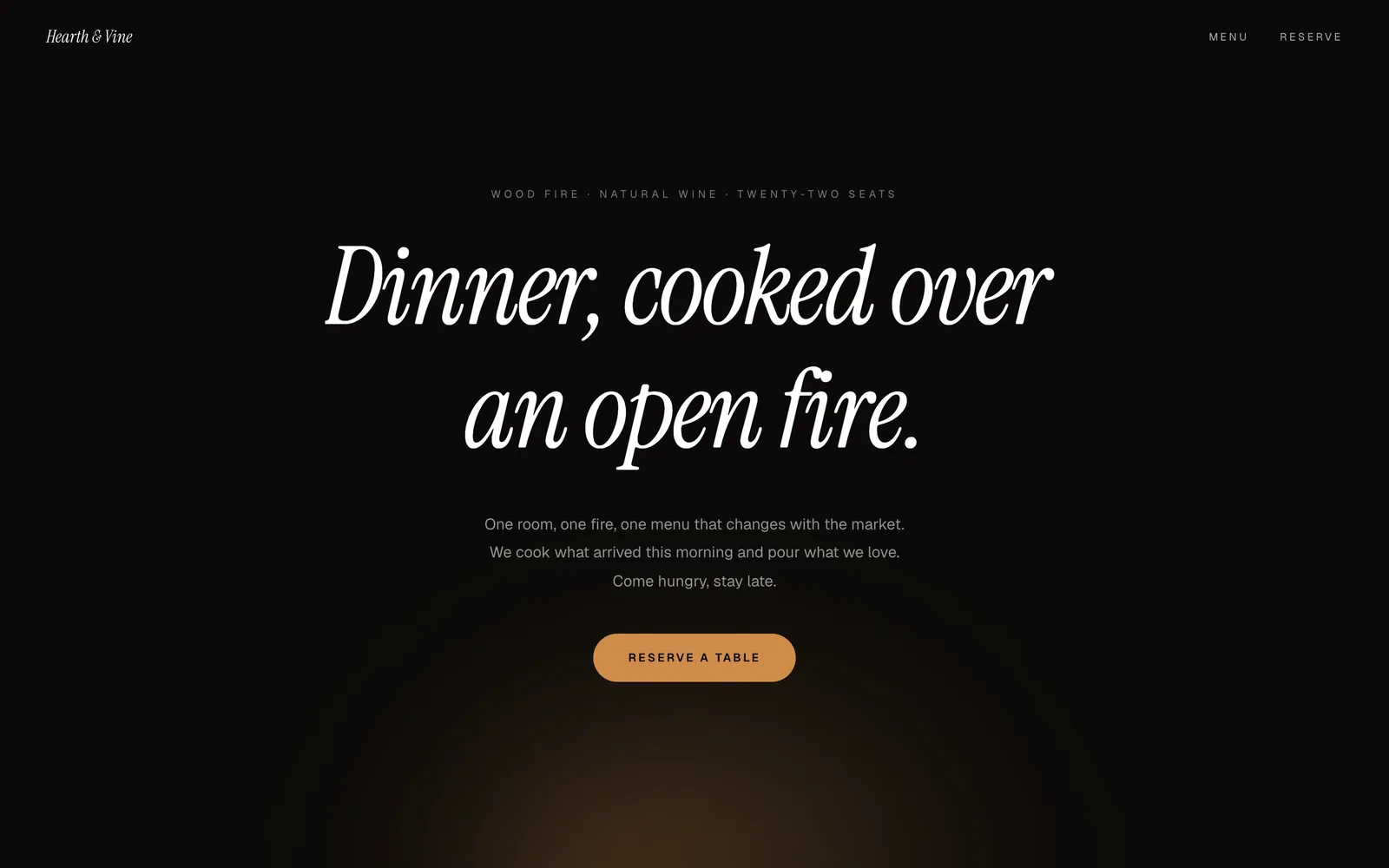
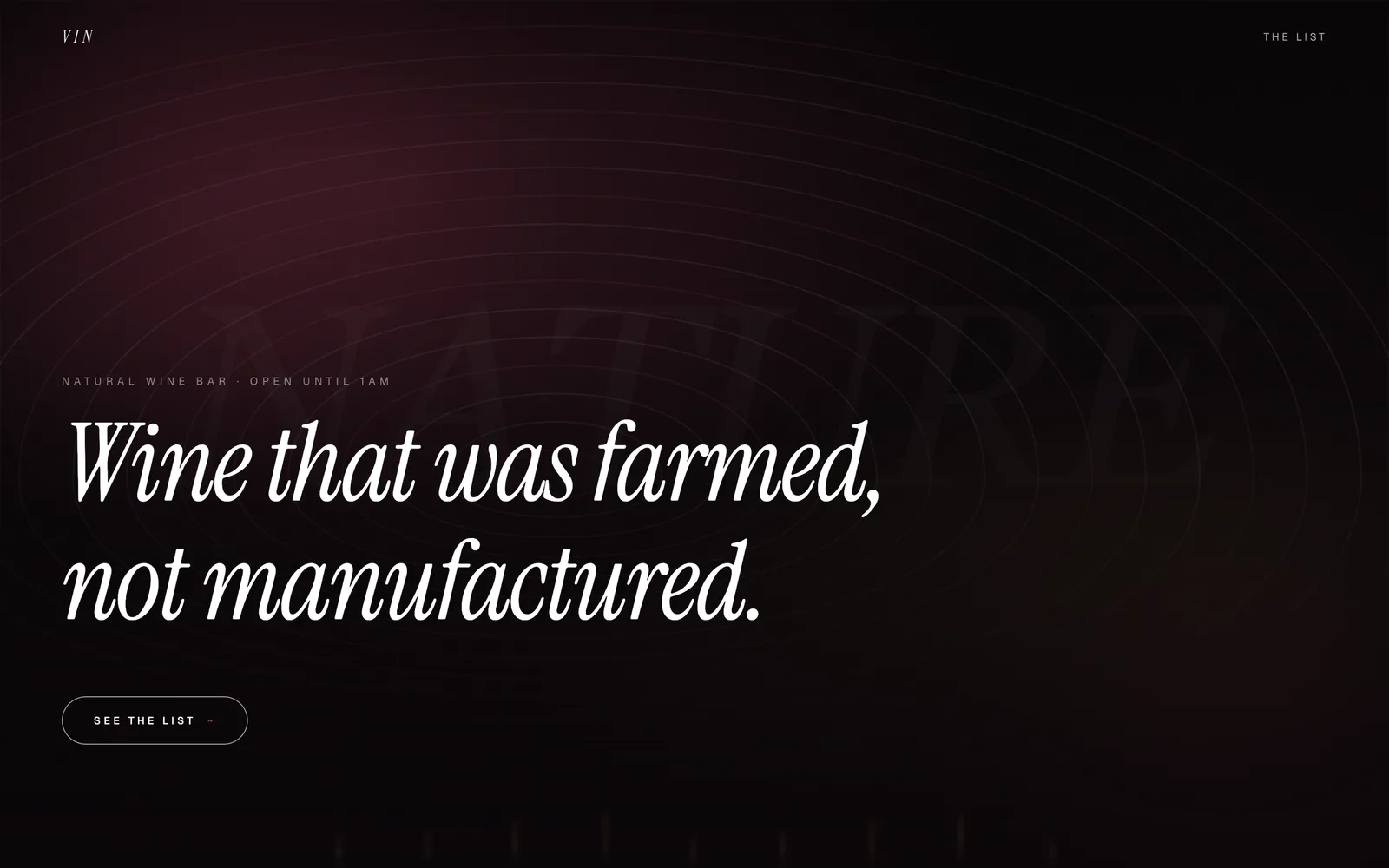
questions people ask first
The catch, in full.
Can I see the menu?
The full menu is on the page as text, kept current by the restaurant, with dietary markers.
Can you cater for my allergy?
The dietary block says how the kitchen handles allergens, and you can ring ahead to confirm.
Do you take large groups?
The groups block says the size you seat, what the private room holds and how to ask.
What time do you open?
Opening hours, including bank holidays, are on the page and edited by the restaurant.
How do I book a table?
The main button opens the restaurant's booking tool, or rings for large parties. The site does not run the table plan.
Can the site take bookings?
It does not run a table diary. If you use a reservation system, the button on the page opens it, which keeps one diary rather than two that disagree on a Saturday. If you take bookings by phone, the number sits where a thumb reaches it and the page says clearly how to ask.
Can we take online orders or deliveries?
No checkout and no delivery integration. The page can link to whichever ordering or delivery platform you already use. That is deliberate: taking food orders properly means live stock, kitchen timing and payments, none of which belong on a marketing page.
Our menu changes weekly. Is that a problem?
It is a form edit that takes a few minutes and is live immediately. That is the main reason menus should be text and not a file: a PDF gets stale because updating it is somebody else's job, and a stale menu with the wrong prices costs more goodwill than a plain one.
Do we need a website when we are on the delivery apps and the map listings?
Those platforms rank your own site above their listing surprisingly often, and neither of them lets you show the room, the story or the full menu on your terms. They also take a cut of everything. The site is the only place where the whole picture is yours.
How much does a restaurant website cost?
$9.99 a month on the One plan, which is the floor and includes the hosting. The site is free, and you pay only when you decide to keep it. There is no build fee, no setup fee and no charge for the preview.
How long does it take to get a restaurant website live?
Under a minute. You pick a finished site, fill in one form with your name, your words and your pictures, and it is live on a real address straight away. There is no build queue and nothing to wait for, because the site already exists.
Can I use my own domain name?
Yes, on the Site plan and above. Every site starts on an address we give it, which works immediately and costs nothing, and a domain you own can be pointed at it afterwards without rebuilding anything.
Are these restaurant websites real or mockups?
All 4 of them are running sites, not pictures of sites. Opening one shows you the same code that would serve yours, filled with our words until you replace them with your own.
Your turn
Look at a restaurant site before you decide anything
From $9.99 a month, and the preview is free. The main button on your site says Book. Opens your existing booking platform or your own system in a new tab, with a tap-to-call fallback for large parties. A form that reaches your restaurant inbox needs a higher plan than the entry one.
See a finished restaurant sitenext door
Neighbouring trades
no card · a real address
Start with Brace.
Nothing here is a mockup. Each one is running on the same machine that would run yours, and putting your own name into one costs nothing and takes under a minute.
Put your name in it