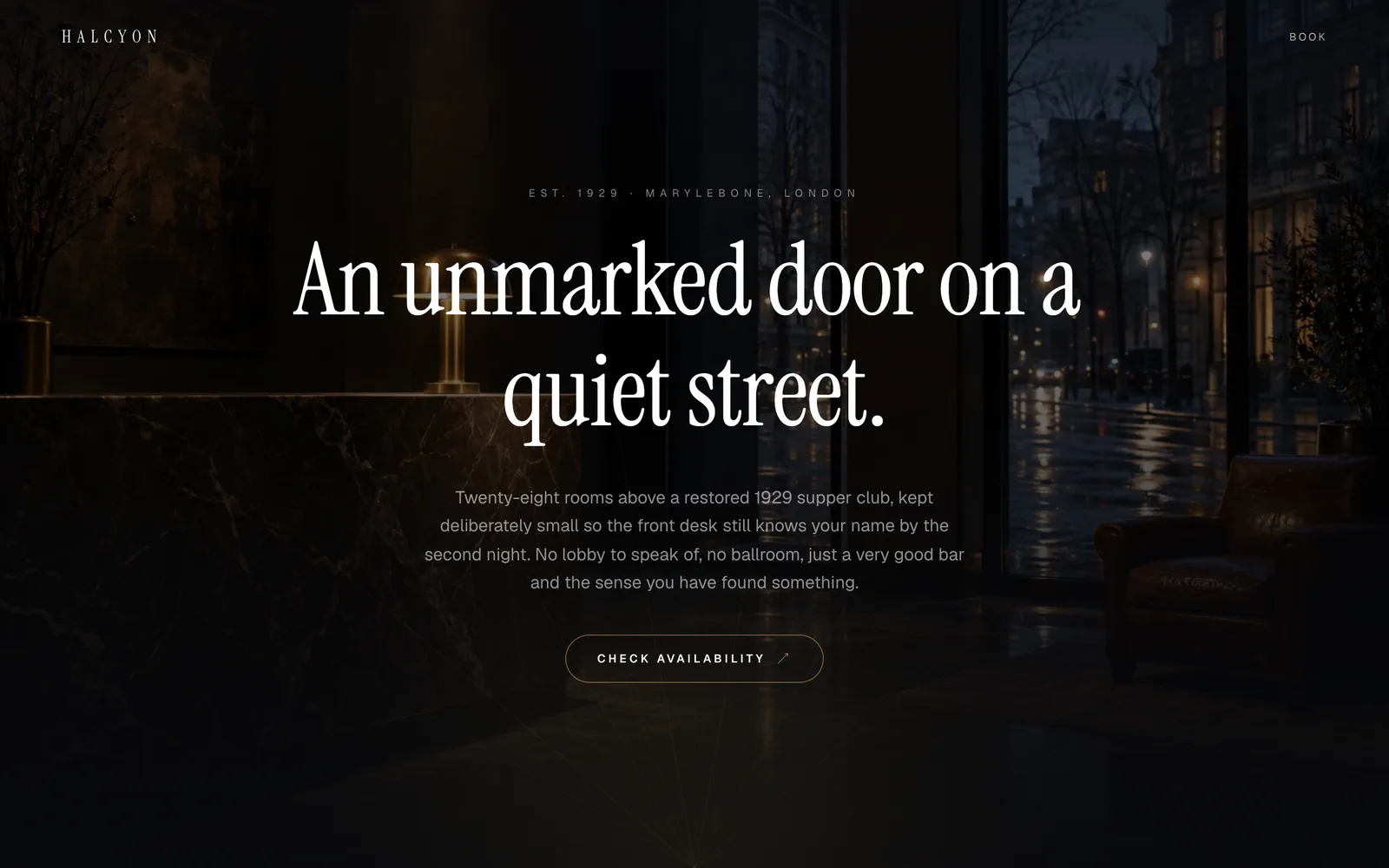
This is what the good hotel sites put first, where the booking engine belongs, and roughly what the site should cost.
What the guest is deciding
Three questions sit under every hotel visit, and a site that answers them in order wins the booking. Is the room what the photographs say? Is the place easy to reach and pleasant to be in? And what exactly will it cost, including the things that are usually extra?
Atmosphere gets the guest to stay on the page. It is the rate, the dates and the cancellation terms that get them to book.
Rooms are the product
Give every room type its own entry, not a gallery of the building. For each one say the size, the bed, the view, who it suits and a from-rate for a night. Photograph the real rooms in daylight, including the bathroom, because that is the picture guests check for.
If two rooms look alike in photographs and differ in price, say in one sentence what the difference is. A guest who cannot tell why one costs more will book the cheaper one and feel short-changed, or give up.
Make arrival and cancellation legible
Put these in plain text, not in a PDF and not in a footer:
- Check-in and check-out times, and whether early arrival or late departure is possible
- How to get there, including the last stretch, parking and any transfer you offer
- The cancellation terms in one short paragraph, before the guest reaches the payment page
- What breakfast and any other meals are, whether they are included, and when they are served
- Pets, children and accessibility, answered rather than implied
The booking engine is not the website
Most hotels already pay for a booking engine, and it is usually the largest single cost in the whole setup, often as a separate subscription or a commission. The website's job is to sell the stay and hand the guest to it cleanly, with the dates carried across if the engine allows.
A site that tries to replace the engine is a rebuild of a product you are already paying for. A site that only links to it, in the same words and the same colours, costs far less and loses nothing.
Small details that decide the booking
Say which languages your reception speaks and offer the page in the ones your guests actually use, rather than a machine translation of everything. Show the season: a pool that is closed in winter or a restaurant that opens at weekends is better learned on the site than at the door.
An enquiry form is a perfectly good route for a small property with few rooms or an unusual stay. It should say when the guest will hear back, and it should be answered in that time.
How much does a hotel website cost
An agency build for a hotel is usually a large project, because it comes bundled with the booking integration, a photo shoot and a content system. For a small property most of that is not needed. The site needs to be accurate, current and fast on a phone.
A finished boutique hotel website is a running site. You put in your rooms, rates, photographs and contact details and it is live on a real address in under a minute. It is free for the first 30 days, so you can see your own hotel on it before you decide, and the monthly price includes hosting and upkeep. The route-by-route numbers are in how much a hotel website costs.
Questions people ask first
Should a hotel website have its own booking engine?
No. Keep the booking engine you already use and link to it cleanly. The website presents the hotel and the rooms; the engine takes the reservation and the payment.
What should a boutique hotel put on its home page?
A from-rate, the room types with real photographs, how to get there, the check-in times and one clear way to book or ask. The story of the building can sit below those.
Do I need the site in several languages?
Only the languages your guests really write in. A page in a language you cannot answer enquiries in sets an expectation you then have to disappoint.